As this article is being written (August 28, 2026), the world’s biggest verified drone show by simultaneous aircraft count is 33,615 drones. It took place in Dujiangyan, Sichuan, China, on May 20, 2026.
Here’s what most people miss: there is no single universal record called “the largest drone light show.” Guinness World Records requires every title to use one clear, measurable variable — the most, longest, tallest and so on.
So, in professional practice, “biggest” needs a metric. It usually means the most UAVs airborne at once, but it can also mean the tallest formation, longest animation, most consecutive formations or highest number of launches within a set period.
What Makes the Largest Drone Show?
Drone count is the simplest measure, so it usually makes the headline. But two shows with the same fleet can look very different. Pack the UAVs closer and the image gains detail. Spread them out and the formation becomes physically larger.
What actually determines scale
Direct, measurable indicators of drone performance scale include:
- Number of UAVs: airborne simultaneously, used in one image or operated through a defined control method.
- Physical formation dimensions: height, width, depth or area, when defined by the record rules.
- Number of launches or separate shows: measured within an hour, day, week or year.
- Animation duration.
- Number of consecutive formations.
These metrics cannot be combined into one “biggest overall” score. Under the Guinness World Records criteria, each title must focus on one variable.
Scale is only half the story. Density, readability, precision and synchronization shape the visual result, while animation complexity, technology, control architecture and operational planning determine how demanding the production is.
These factors themselves don’t make a show the biggest, but they strongly impact its quality. A record proves one specific achievement; they help determine whether the biggest show is also one of the best.
How Drone Light Show Scale Is Measured
The first rule is simple: define the exact quantity. Drones delivered to the site, launched, airborne and used in a qualifying formation are not necessarily the same number. Dimensions need metres; duration needs a clear start and finish; launch records need a defined time window.
Drone count: launched, airborne or used?
These words are not interchangeable.
Suppose 10,000 UAVs arrive on site. Some may be reserve units, some may fly in different shows, and some may not complete a qualifying attempt. None of those scenarios automatically means 10,000 drones were airborne at once.
This happened in Shenzhen in 2024: 10,200 quadcopters launched, but 10,197 met the Guinness requirements. For a drone light show record, the certified figure matters more than the promotional one.
Formation dimensions versus visual density
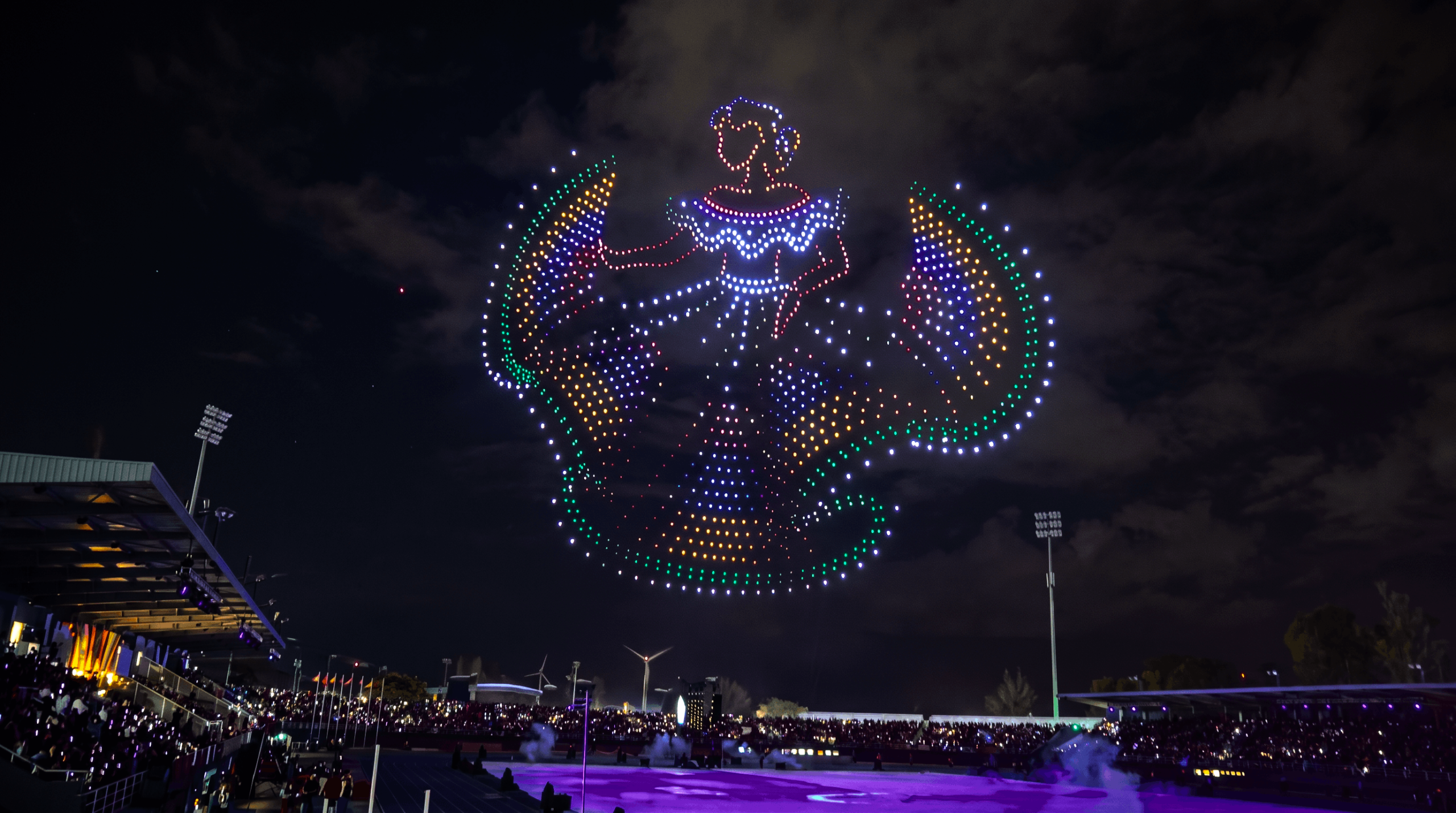
Formation size and density are related, but not interchangeable. Wider spacing creates a larger image; tighter spacing creates more detail and stronger lines. Designers balance both around the audience’s distance and viewing angle.
Density is a visual-quality characteristic. Physical height can be a record metric. In 2026, the tallest aerial display of a fictional character formed by drones reached 139.5 metres.
Synchronization, trajectories and control
Every drone follows its own route while staying on the same timeline as the fleet. With five-digit swarms, navigation, radio conditions, battery health, monitoring and launch organization become much harder. These factors do not measure scale directly, but they make record-sized shows possible.
How to Set a Guinness World Record for Largest Drone Light Show
A Guinness title must be measurable, breakable, standardisable, verifiable and based on one variable. This is why fleet count, element height, animation duration and single-computer control are separate categories.
We break down the process below:
- Choosing the record category
The process often starts with a client saying, “We want a Guinness World Record.” Lumasky can assess the idea, fleet and venue, then recommend a suitable category.
The biggest drone-built panda, the tallest formation of a bottle, the largest flying portrait — you can apply for any.
Guinness checks whether the title is available, may adjust its wording, and can approve or decline the application. Only Guinness issues the final guidelines and verifies the result. A light show provider prepares the attempt, but cannot guarantee the record.
- Counting and independent verification
For a record attempt, a Guinness adjudicator and an independent expert attend the site. Both check the declared number and repeat the key verification steps.
The quadcopters are counted on video before and after the show. The result is then compared with the amount of UAVs that took off and joined the qualifying formation.
- Evidence and formation rules
The on-site observation is only one part of the process. To prove that a formation contained the declared number — for example, 1,500 UAVs — the evidence package may include the counting videos, the designed-formation screenshot, flight logs for every drone and full-show footage.
These materials allow Guinness to verify the attempt and keep the proof on record.
Exact rules for a record attempt vary. In aerial-image categories Lumasky has worked with, the formation must remain visible for at least 20 seconds. It must also beat an existing benchmark or qualify for a distinct approved title.
A show can still be a national first or a landmark production without holding a Guinness World Record. The important thing is to describe the claim accurately.
Global Leaders: Who Broke the Guinness World Records in Drone Shows
There are more record categories in drone performances than most people realize. These are several selected public Guinness World Records benchmarks as of August 28, 2026:
| What sets the record | Guinness World Records title | Public benchmark |
| Simultaneous fleet | Most drones airborne simultaneously | 33,615 UAVs |
| One aerial image | Largest aerial image formed by drones | 33,605 UAVs |
| Single-computer control | Most drones airborne from one computer outdoors | 22,580 UAVs |
| Physical height | Tallest aerial display of a fictional character | 139.5 m |
| Duration | Longest animation performed by UAVs | 30 minutes |
| Flying screen | Largest flying LED screen formed by drones | 9,969 UAVs |
| Pyrotechnic output | Most fireworks launched by drones | 7,496 fireworks |
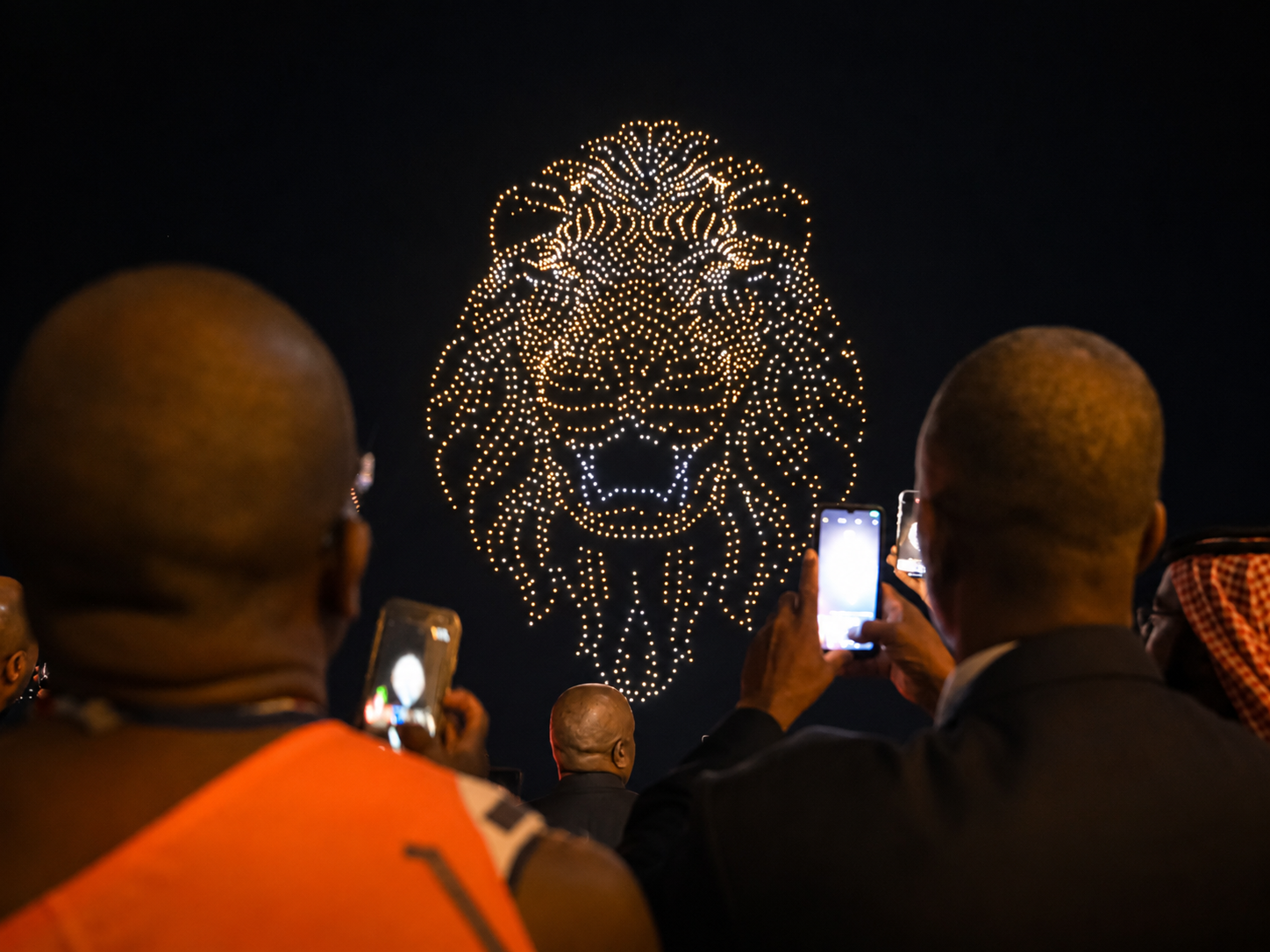
The list is not exhaustive. Guinness also has subject-specific image titles for birds, mammals, bones, landmarks, flags and logos. Most are measured by the number of drones in the image, not its physical dimensions. Pyrotechnic titles can measure fireworks launched, drones launching them simultaneously or display altitude.
Drone show records: from thousands of units to five-digit fleets
The pace of growth has been extraordinary. The simultaneous-flight benchmark rose from 3,051 UAVs in 2020 to 10,197 in 2024 and 33,615 in 2026. Five-digit fleets are no longer a one-off experiment; they are becoming a distinct megashow tier.
Record projects create test cases at the edge of what current systems can coordinate.
These projects push fleet monitoring, network capacity, launch automation and on-site workflows to new levels. Once proven at record scale, those methods raise expectations for major city, stadium and brand productions.
International recognition matters too. Guinness turns a marketing claim into a benchmark understood worldwide. A record-breaking drone show also forms a powerful media asset: one huge, recognizable image can travel across news, social media and tourism campaigns. That combination of proof and visibility is a major reason governments and global brands invest in record attempts.
How Lumasky Works at Record Scale
Lumasky has achieved 5 Guinness World Records titles:
- “The most drones performing an aerial dance display”, 2022.
- “The most drones launched in a week”, 2023.
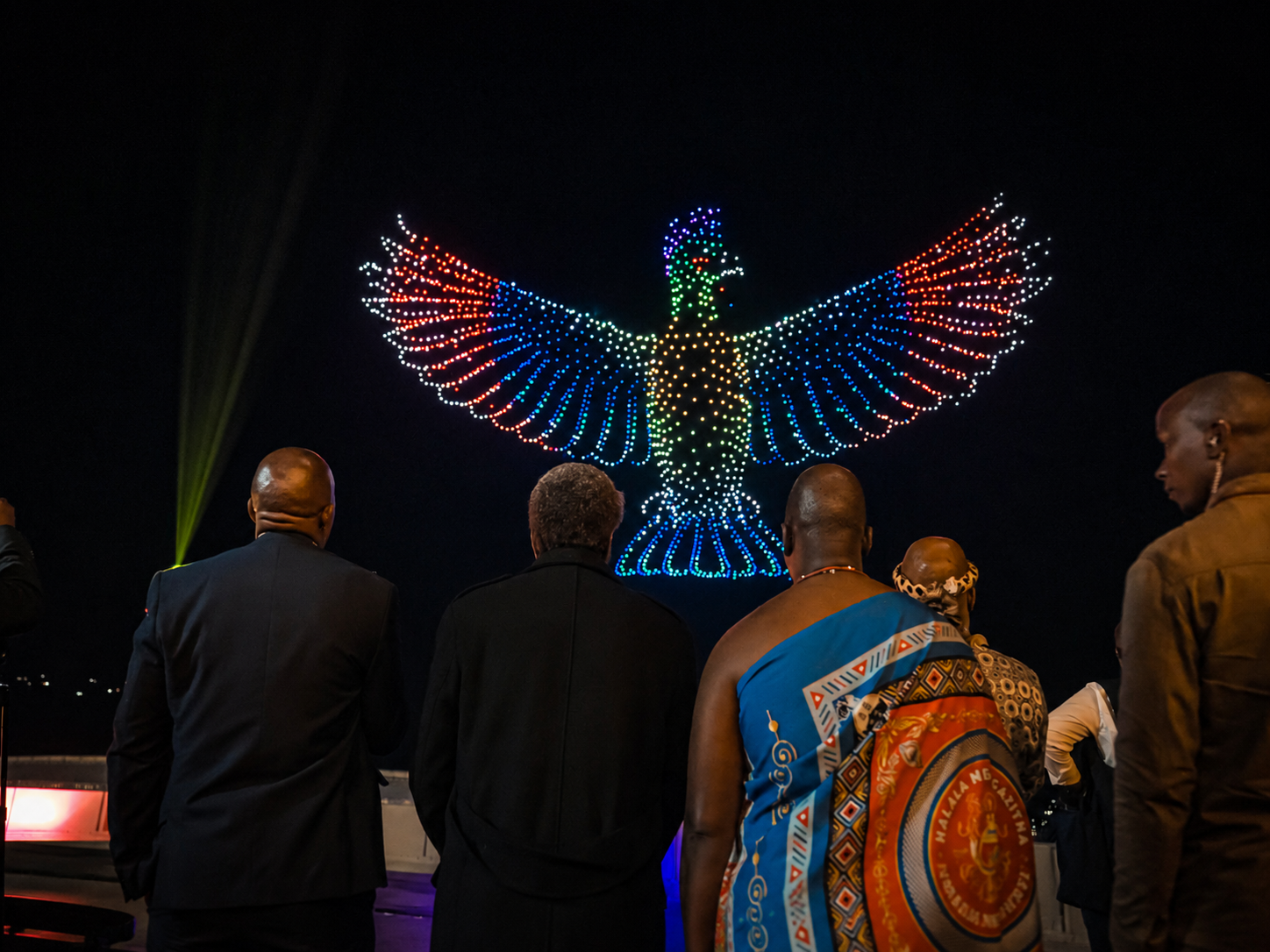
- “The largest drone formation of a bird swarm”, 2023.
- “The largest aerial display of a bird”, 2024.
- “The largest drone formation of a bone”, 2025.
The titles cover different variables — choreography, a specific aerial image and operational output. That first-hand experience helps Lumasky guide clients through category selection, communication with Guinness, evidence planning and the final submission.
Lumasky also delivers projects at the current megashow level:
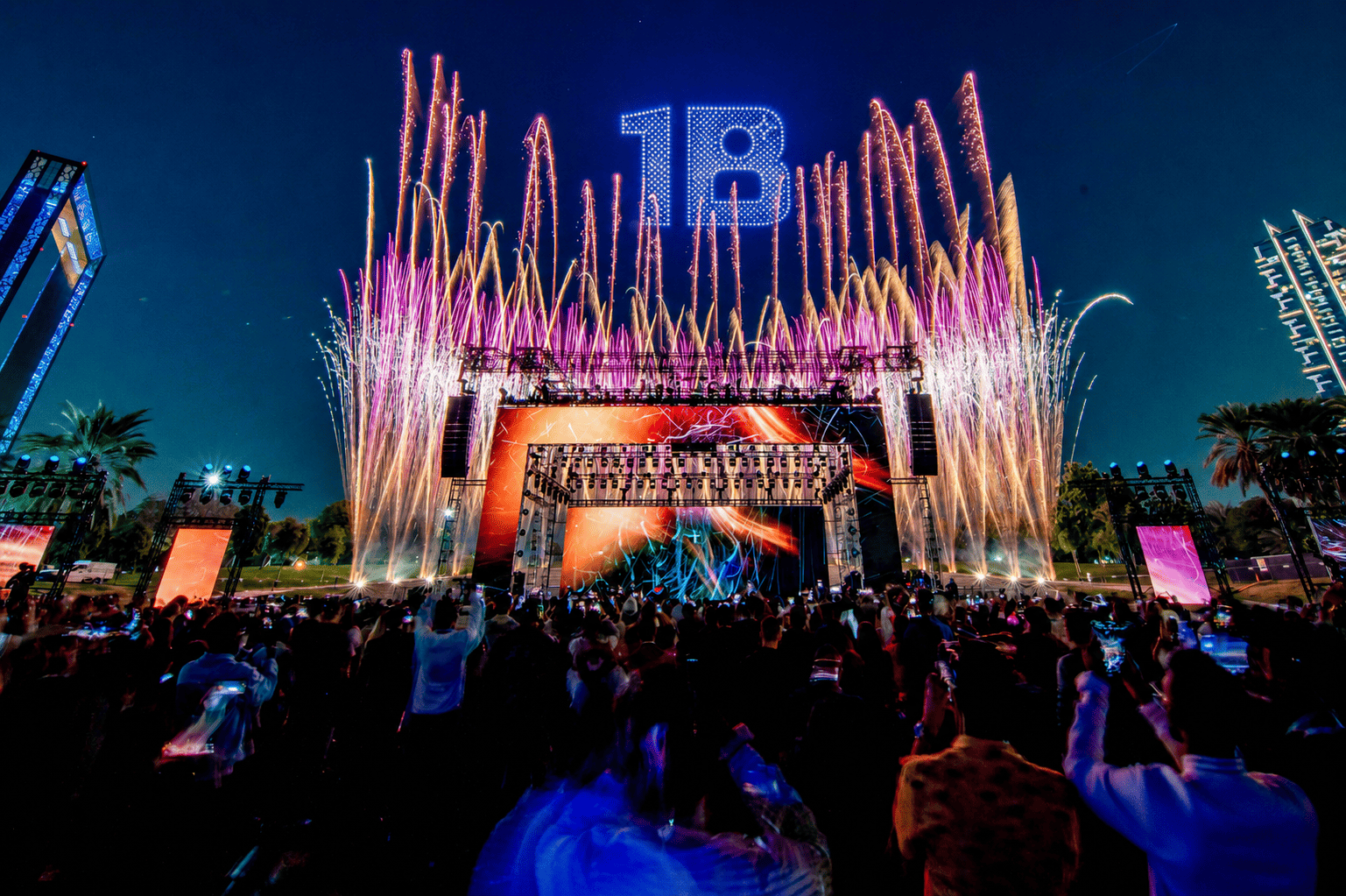
- Two 6,300 drone shows for teamLab Phenomena Abu Dhabi, performed two hours apart.
- 4,000 drones for the Red Bull Tetris World Final, turning the sky into a playable game.
Not every world-scale project needs a record. You can launch the biggest show in your region and generate major news coverage — without the official title.
Yet for official record attempts, Lumasky works around the approved metric, Guinness guidelines, independent verification and evidence. For every megashow, reliable control, readable formations and disciplined execution remain essential. Lumasky combines that experience with one of the industry’s biggest fleets of up to 18,000 quadcopters.
Does a Bigger Fleet Always Make a Better Show?
No. More quadcopters provide more pixels, detail and physical reach, but the fleet still has to fit the venue, viewing distance and idea.
A clear 500 drone element in the right place can work better than several thousand drones spread too thinly. For planners, the useful questions are: how large will the image look from the audience zone, how much detail is needed, and is the goal a certified record, a media headline or the strongest live experience?
The current world record for largest drone show uses 33,615 quadcopters. The world’s most effective performance, however, is the one whose technical scale and creative idea are built for the same purpose.
If you are planning a landmark light show or a record attempt, share your goal with Lumasky. We’ll help define the right category, scale, creative concept and technical setup for your event.