Do Drones Fall?
Rarely, but it happens. You’ve probably seen footage of some drone show operators losing drones during a live performance.
Does that mean drone shows are unsafe? Not necessarily, for these 2 reasons:
- No technical system is able to reduce risk to zero. Especially when massive drone fleets rise up in the air.
- Professional drone displays are designed with failsafes. This doesn’t mean zero risk. It means the system is built to fail safely ー switching to a controlled state in case of emergencies.
The real question is whether the crew is prepared when something goes wrong.
Because when failures do happen, they can become expensive. And not only in terms of money.
Losing the license. Damaging reputation. Cancelling other projects. Or worse, hurting the crowd. Not to mention the cost of repairs and replacements.
So why do drones actually fall?
Let’s start with the least obvious factors, and work our way up to the most common ones.
6 Causes of Drone Show Failures
- Human error
What can happen:
A skipped checklist step, an unchecked software setting, or pressure to launch despite unsafe conditions.
In the Melbourne drone show incident, investigators noted higher-than-normal pressure on the pilot and a missed wind check.
Human errors are rare in drone shows. In these highly automated performances, every movement is programmed, tested, and rehearsed long before the takeoff.
But still, it’s always people who launch drones.
How to avoid it:
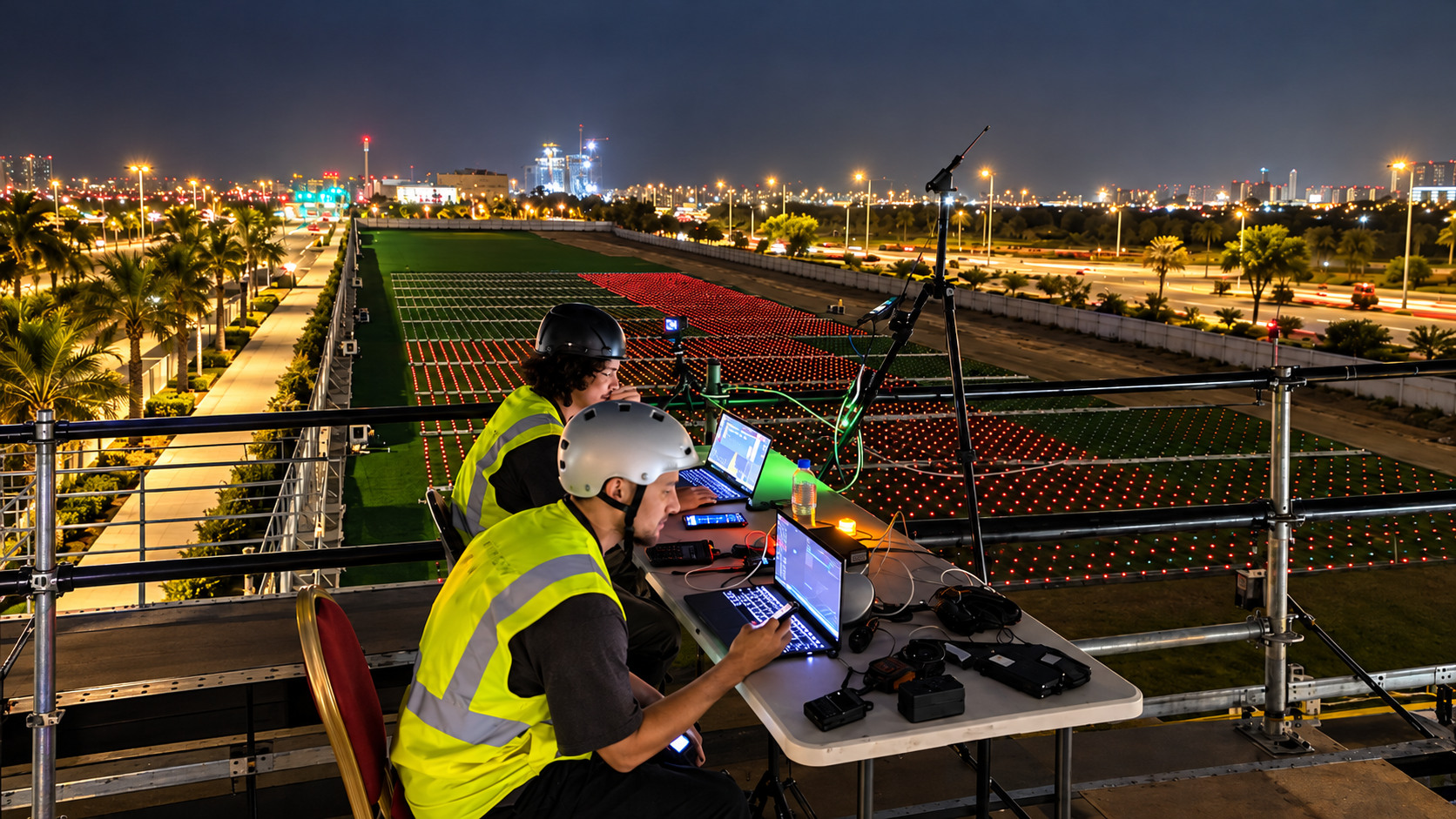
A two-pilot crew with clear roles — and double-checking each other’s commands — can reduce the human factor to a minimum.
- Hardware failure
What can happen:
Motors, propellers, or other components can be damaged due to sand getting into motors, rough transportation, or a hard landing during tests.
A damaged quadcopter can’t fly normally. The best-case scenario is it doesn’t take off at all. The worst-case — it does, loses control and falls.
How to avoid it:
Bringing spare drones and parts is what professional drone show teams do for every performance. As well as inspecting all the equipment for faults. Multiple times.
- Software failure
What can happen:
Wrong software settings or the corrupted flight plan file can make drones behave unpredictably.
In 2024 in Orlando (USA), a 500 drone show malfunctioned with drones colliding in the air and falling into the crowd, seriously injuring a boy. According to the report, the final flight-path file hadn’t been uploaded correctly, so the whole formation lifted off “misaligned” causing the failure.
How to avoid it:
Drone show crews need to verify the mission files, simulate the choreography, and be ready to put the show on hold if anything goes off the script.
- Battery issues
What can happen:
A damaged or poorly charged battery can lose power during flight. High-intensity LEDs, strong wind, and extreme temperatures increase battery use and can make a drone land unexpectedly or fall.
How to avoid it:
Keep a precise health log for every battery. Never fly below ~20% charge. Swap in fresh packs for each performance.
- Signal loss
What can happen:
Drone shows depend on stable positioning and communication signals. Any GNSS glitch (like jamming or simply losing satellite fixes) can let a drone drift or land in an emergency-mode.
Like at Sydney’s Vivid festival, where unexpected radio interference caused 89 drones to land shortly after takeoff.
How to avoid it:
Here’s what we do at Lumasky: we run a spectrum analysis and monitor GNSS and radio channels before and during every flight in every country. Our system has strict safety algorithms, and the crew follows clear emergency protocols for GNSS loss, radio interference, or ground station failure — from switching to a backup channel to safely landing the fleet.
- Wind gusts
What can happen:
Strong wind can push drones off their planned paths, increase battery use, and in extreme cases make them fall. The tricky part is that wind can vary dramatically between ground level and the show altitude. And it can change even when forecasts look safe.
Recently, in Australia hundreds of drones ended up in the water, for strong winds pushed the drones beyond their operating limits.
How to avoid it:
It’s never enough just to check forecasts. Drone show pilots always evaluate actual conditions on site and run test flights. If weather exceeds the system’s safe limits, the show should be delayed or cancelled to prevent incidents.
Building Safety into Spectacle Is Part of Every Drone Show
You probably haven’t heard of numerous failures in global drone shows. Because industry-wide, drones almost always land safely. They’re programmed to.
But even when everything has been planned out ー an occasional drone can fall. That’s why safety procedures and team training matter so much.
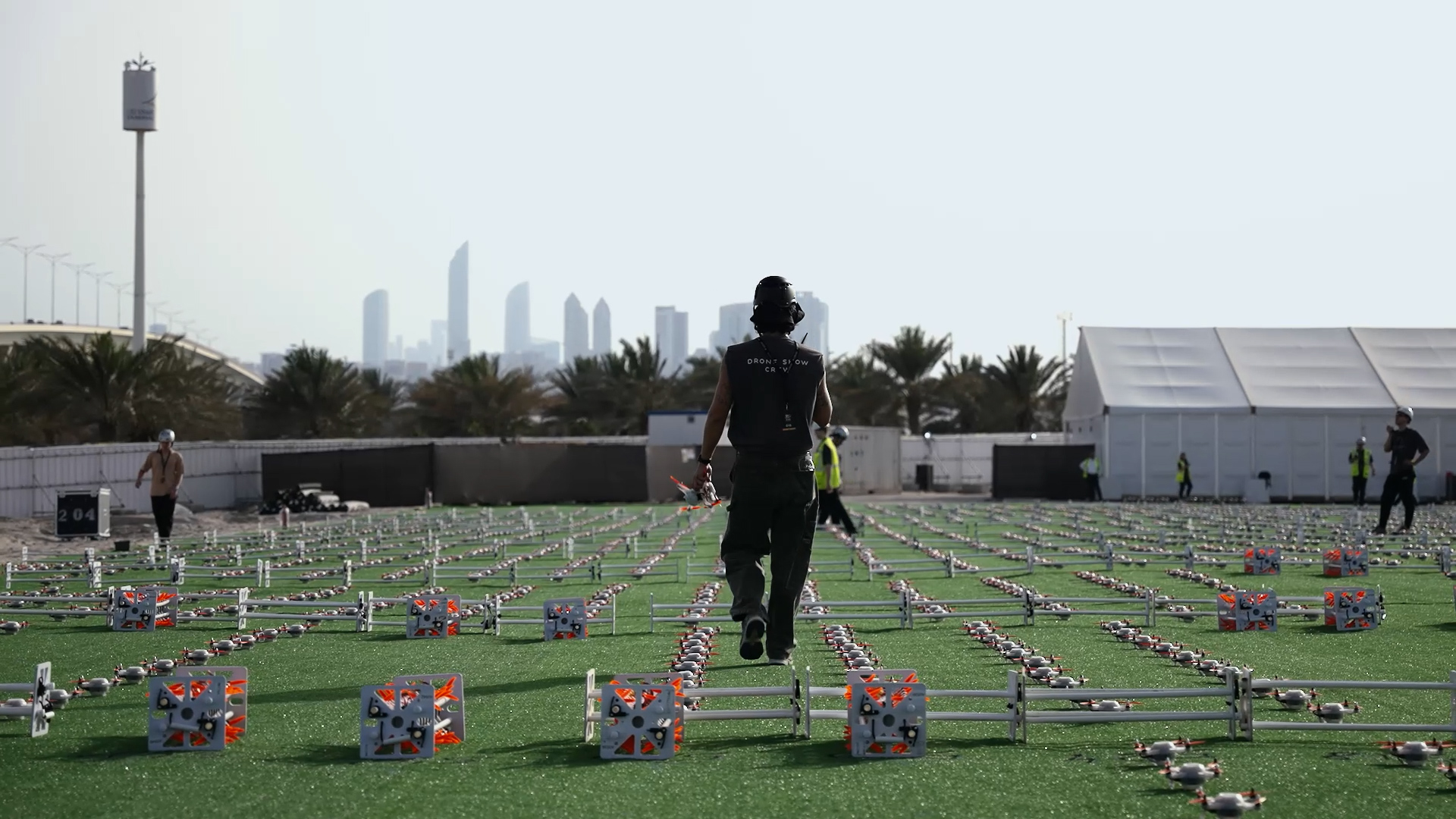
Professional drone show operators never fly over people, open roads, property or critical infrastructure, and insure third-party liability. And their crew knows exactly how to react when something goes off plan.
That’s the approach we follow at Lumasky: every show is built around clear safety procedures, emergency protocols, and a certified and highly-trained team.
In the end, the safest show is not the one with zero risks, but the one where every risk has already been planned for.