In this article, you’ll learn the typical duration of a drone light performance and what affects it.
Also, why world-class drone shows rarely go beyond 10 minutes — even though the technology allows.
Typical Duration of a Drone Light Show
Most drone light shows last between 5 and 15 minutes.
That might sound short at first — but in reality, this is the sweet spot where the show feels powerful, engaging, and memorable.
What Determines How Long a Drone Show Can Last?
The duration of a drone show is not fixed. It depends on a combination of technical and creative factors working together.
The main factors that can influence the flight time:
- drone battery life
- number of drones in the air
- weather conditions
- location
- complexity of the performance
- overall concept of the show integrated in the event pipeline.
Let’s break down the most important ones.
Battery Life and Drone Technology
Drone flight time is the main technical limitation.
Some drone show companies employ drones that can fly for up to 13 minutes. Other providers claim to use advanced UAVs with a battery capacity allowing them to perform for up to 20 minutes.
Most professional drone shows stay within an optimal flight window, and don’t “stretch” it unnecessarily. They design the show to deliver maximum impact within the reliable time.
However, battery life is not constant. Weather changes can reduce it significantly.
Weather Conditions
Weather plays a huge role in how long a drone show can last. Especially within the defined flight zone, where all drones must operate safely and precisely.
For example:
- Wind directly affects flight stability and drains batteries faster
- Heavy rain can impact signal quality and ground conditions
- Extreme temperatures affect battery performance too.
Even in good conditions, everything is carefully monitored to ensure safety and visual precision.
Location and Flight Area
Animation Complexity and Flight Patterns
Here’s an important nuance many people don’t realize:
very complex animations can shorten the effective duration of the show. Even if the weather is perfect.
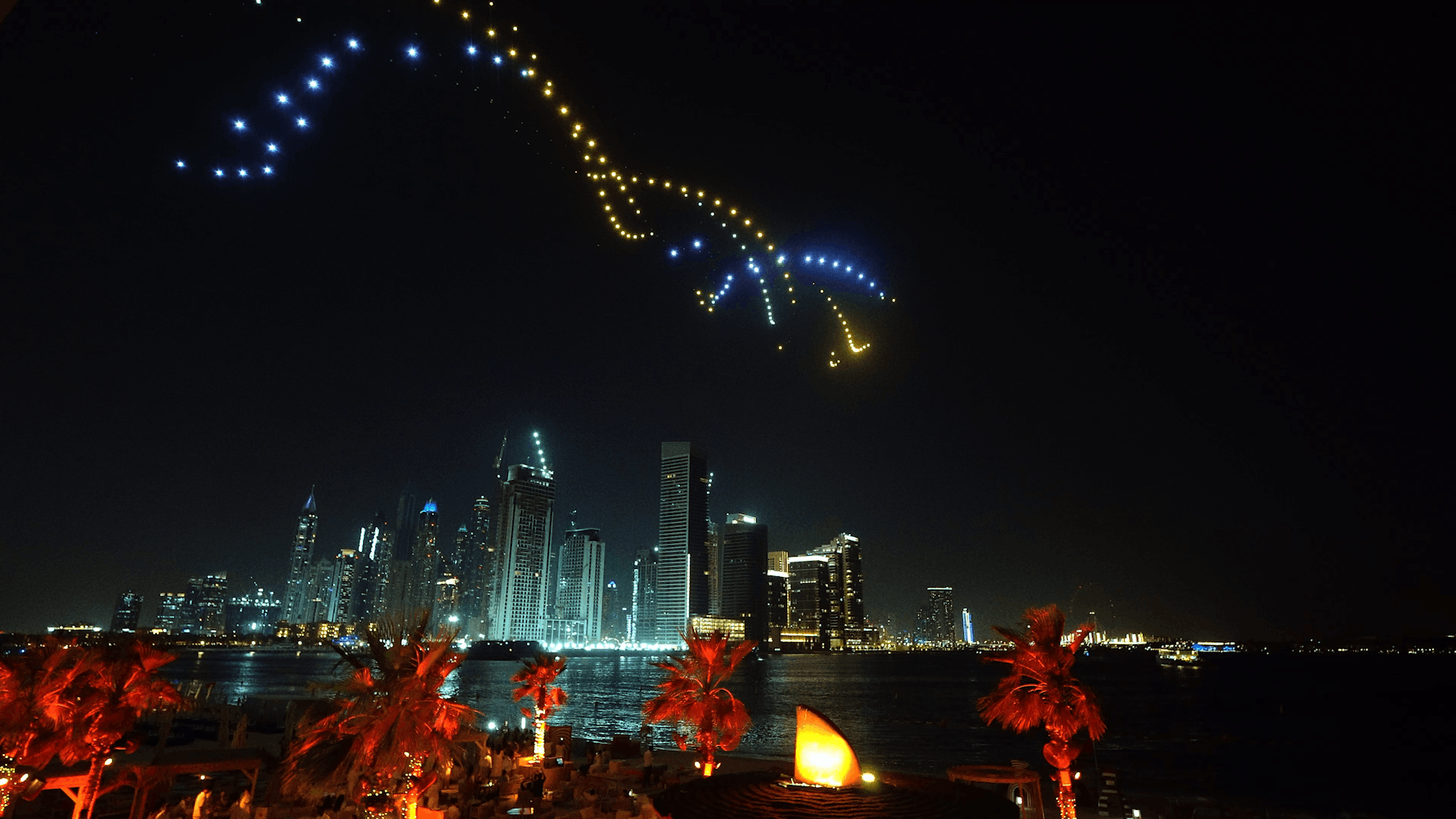
A static logo made of 100 drones is less demanding than a 1,000-drone dragon moving across the night sky.
Fast transitions, dense formations, and highly detailed visuals require more energy and precision.
Drones need time to accelerate, slow down, and reposition safely — they don’t move instantly.
If the weather is challenging (let’s say, high winds), intricate light displays may need to be:
- slightly shorter
- visually simplified
- or adjusted in pacing, so that batteries have enough charge to perform through the end.
This is how professional teams maintain quality instead of risking the result.
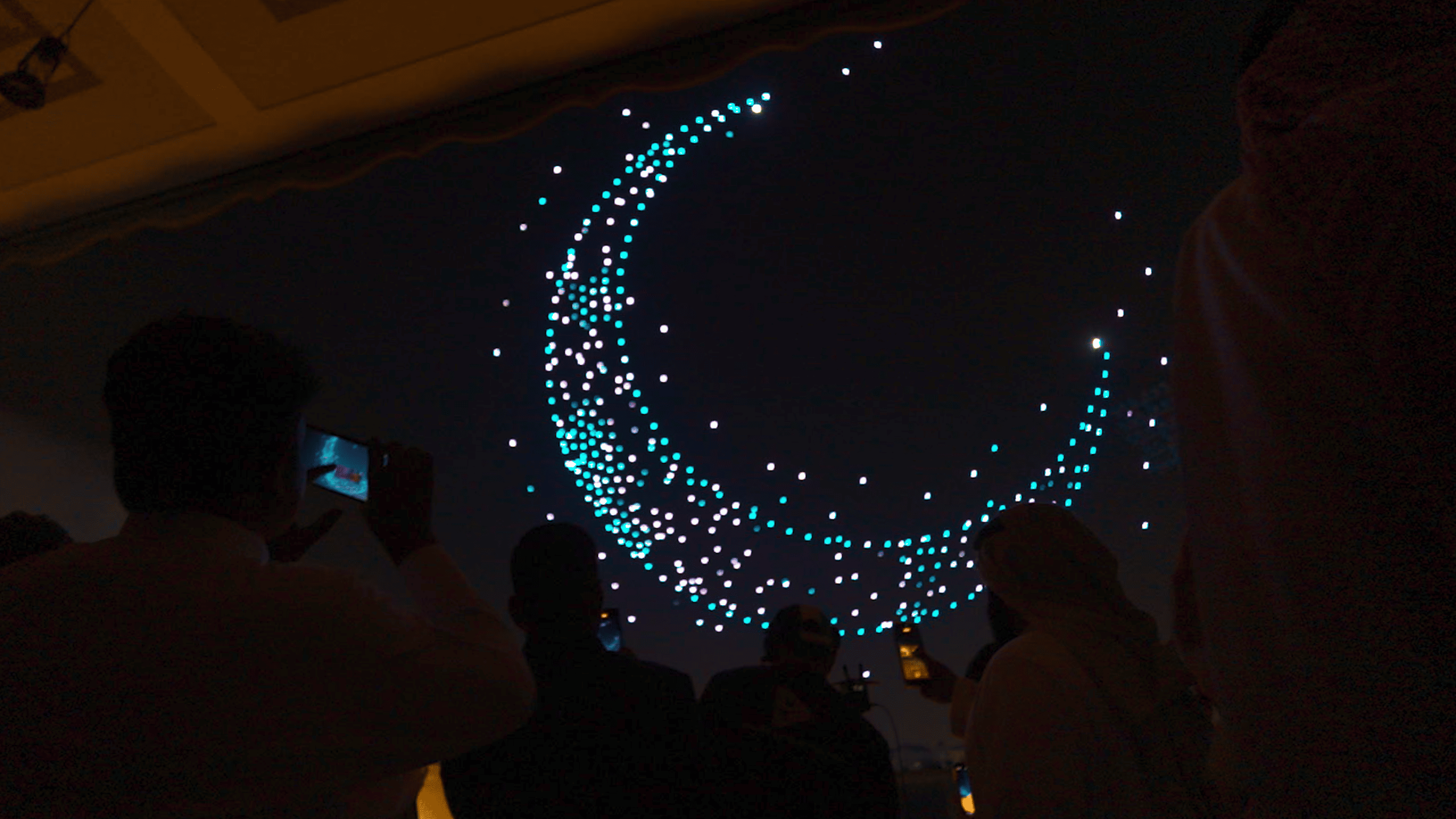
Can Drone Shows Be Extended or Repeated?
Yes — a drone show can be extended. But not always in the way people expect.
There are several ways to do it:
1. Launching drones in groups
Instead of flying all drones at once, the fleet can be divided into groups that take off at different times. They can fly separately, or meet mid-show and build a bigger formation in a shared airspace.
This allows the overall show to last longer.
2. Multiple shows during one event
With additional batteries or recharging time, the same fleet can perform again later — for example, after 1-2 hours.
In case of an ultra-large display engaging thousands of drones, this break can take even longer.
3. Multi-day or repeated shows
For festivals or large events, drone shows can run over several days, building stronger audience reach and media impact.
However, even with these options, experienced producers know one thing: longer doesn’t always mean better.
Short vs. Long Drone Light Shows: Which Works Best?
This is where strategy matters most.
A great drone show is not about duration. The most impactful shows are often shorter than technically possible, around 8-10 minutes. This is when the audience is fully focused, emotionally involved, and actively filming the key moments.
Here’s how it works in reality:
Shorter shows (5–10 minutes):
- strong “wow effect”
- easier to keep audience attention
- more shareable on social media (as algorithms favor shorter videos)
- more comfortable for the viewers looking up.
Longer shows (15–20+ minutes):
- can support complex storytelling
- require very strong creative direction
- harder to keep energy and attention.
The latter is purely a human factor. People naturally lose focused attention after about 8–10 minutes of a visual experience. If the show is too long, even impressive visuals start to feel repetitive.
That’s why the best shows:
– build quickly
– reach a strong peak
– end before the audience gets tired.
Unless you’re aiming for a Guinness World Record for the longest drone show, don’t stretch it. Short and powerful often wins.
But if the narrative requires, go for a longer option. Just be sure to develop a powerful idea that will keep people’s eyes glued to the night sky the entire show, and stay in their memory long after it.
How Does Duration Affect the Cost of a Drone Show?
Drone light shows are typically priced per drone — this is the industry standard.
However, longer shows can still cost more. Not because of the extra minutes themselves, but because of what they require behind the scenes.
Extending a show often means:
- more complex animation and transitions
- additional synchronization and control
- more detailed scripting and production work.
In other words, duration impacts cost indirectly — through the complexity needed to keep the show engaging and precise from start to finish.
Choosing the Right Duration for Your Event
So, how long should your drone light show be?
It depends on your concept and your goals. There’s no one-size-fits-all duration.
A well-designed drone show is about making every second count. The right timing is defined by:
- what you want the audience to feel
- how the show fits into your program
- and what kind of impact you want to create: to shock and wow, or make your brand remembered through a deep story.
If you’re planning a drone show and want to understand what duration will work best — it’s better to discuss it along with specific requirements of your event.
Share your brief with us — and we’ll help shape the right approach.